Moss Studio
A Conversation with the Material
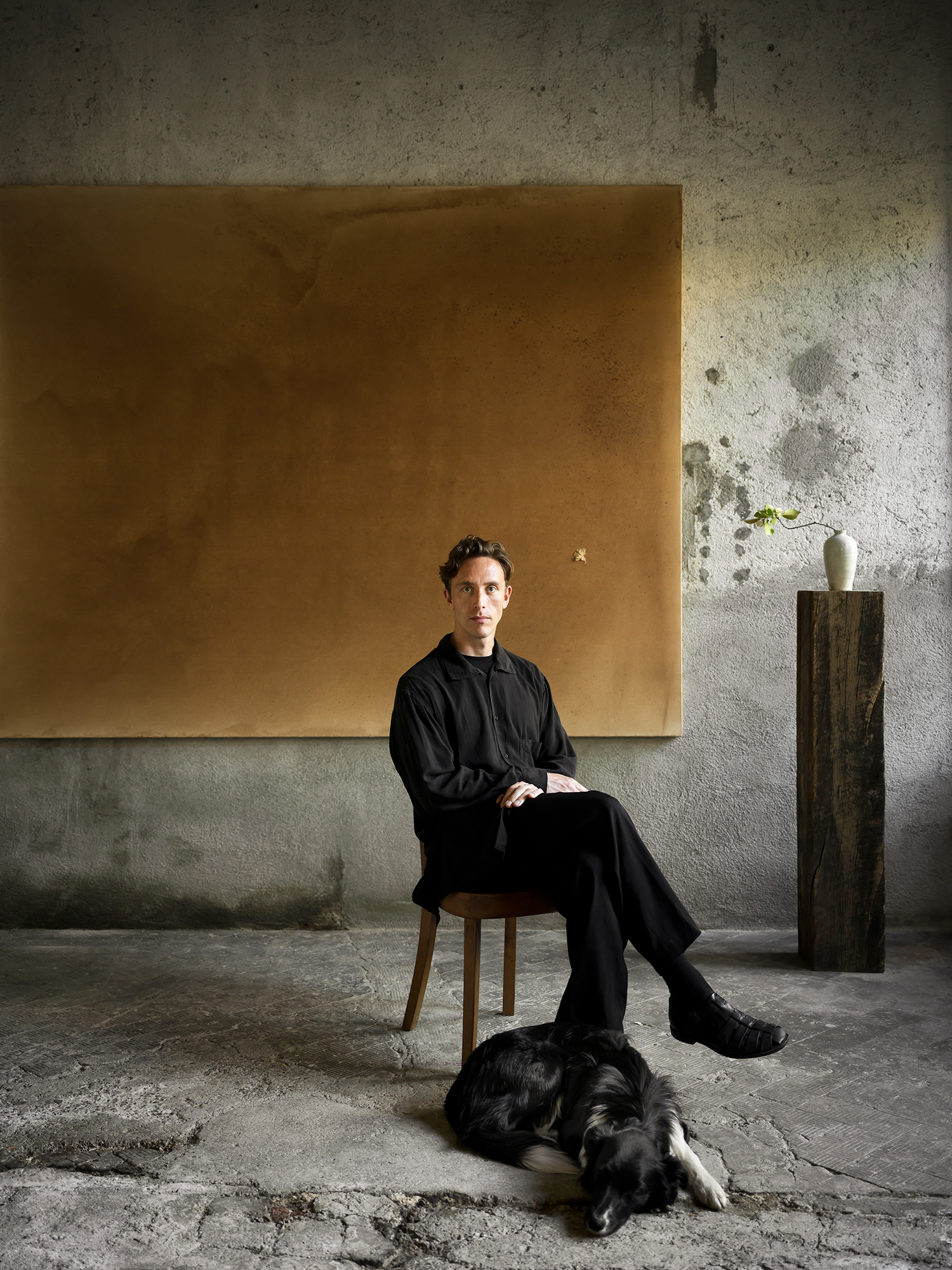
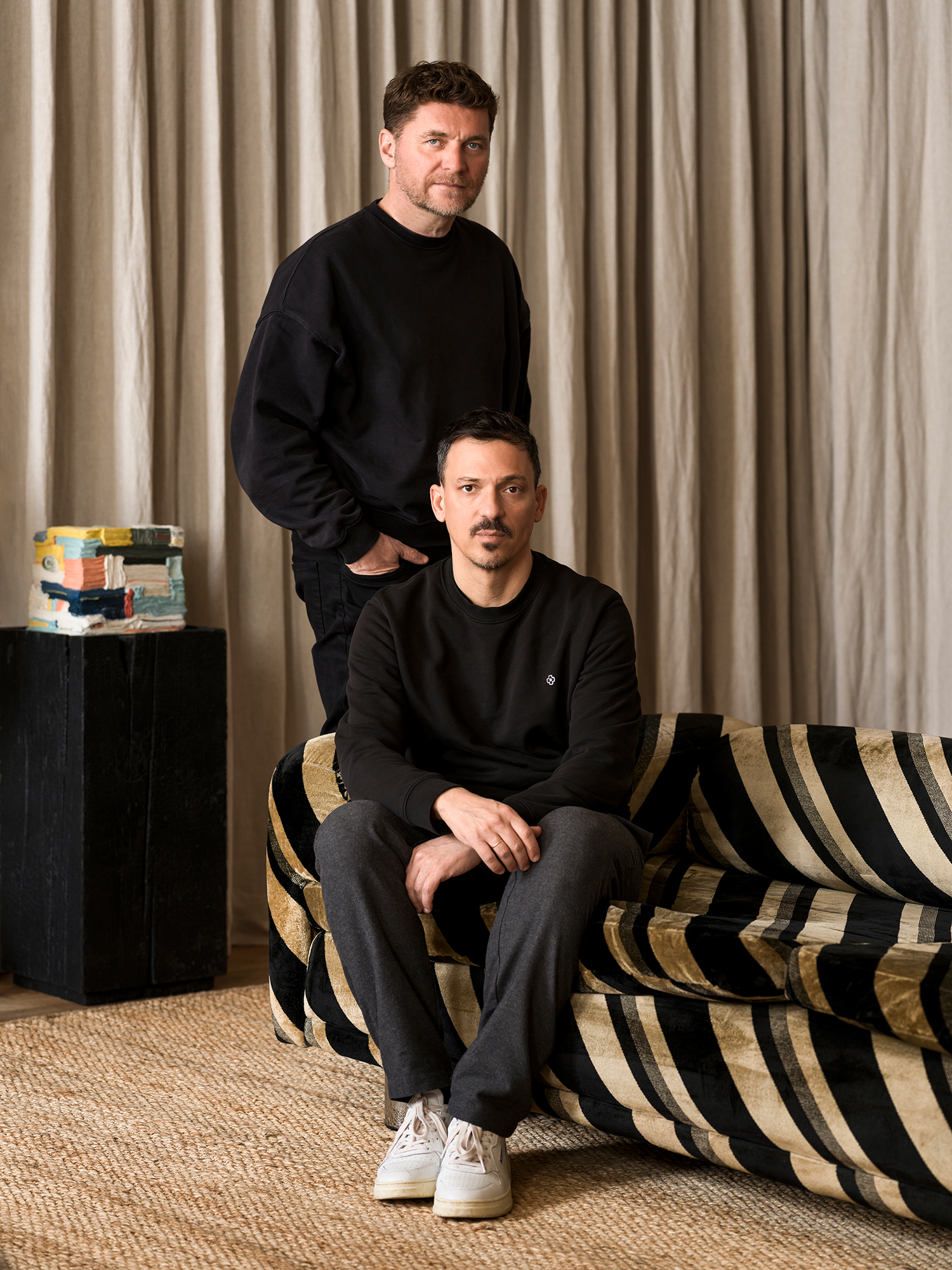
Moss Studio is a Belgian practice founded by Mario Vanwynsberghe, a woodturner and interior architect and Veerle Knockaert, a herbalist. At first glance, this combination may seem unusual, yet it makes perfect sense and reflects the studio’s distinctive approach to material, craft, and experimentation.
Mario’s path into woodturning began with a deep interest in traditional crafts. “In my country, woodturning is an old craft that was deeply rooted in furniture making, visible in details such as table legs, staircases, and other small elements that give a space character” he explains.
“I started with a small lathe, purely out of curiosity, and I was immediately drawn in. It is both creative and meditative. You focus, you calm down, and at the end, you hold something tangible in your hands. That experience stayed with me.”
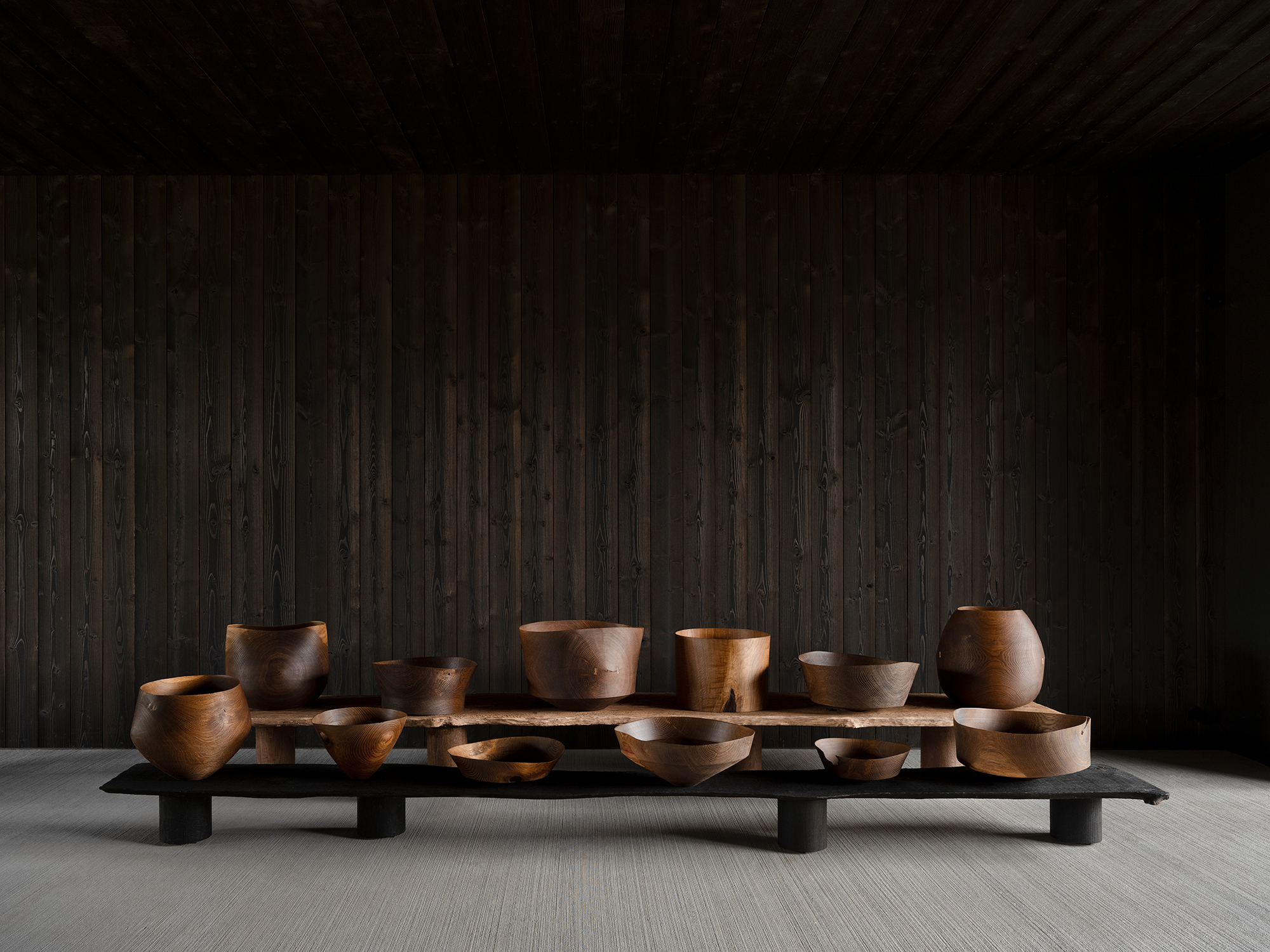
What began as a pastime quickly developed into a professional practice. Over time, Mario invested in larger machines and took on more ambitious forms. Yet for both Mario and Veerle, the process remains open ended. Each piece of wood is unique, and every turn becomes a study in proportion, line, texture and the balance between mass and lightness. Coming from an architectural background, where everything is measured and meticulously planned, Mario describes working with wood as both liberating and humbling. “Wood has its own will. You may have a sketch, an idea, but the wood decides. You learn to listen.”


Sourcing the wood is as integral to the practice as the turning itself. Mario often works with private owners who have trees that have fallen or were felled due to disease, he cuts them into workable sections with his chainsaw, while other pieces come from acquaintances who are familiar with his work.
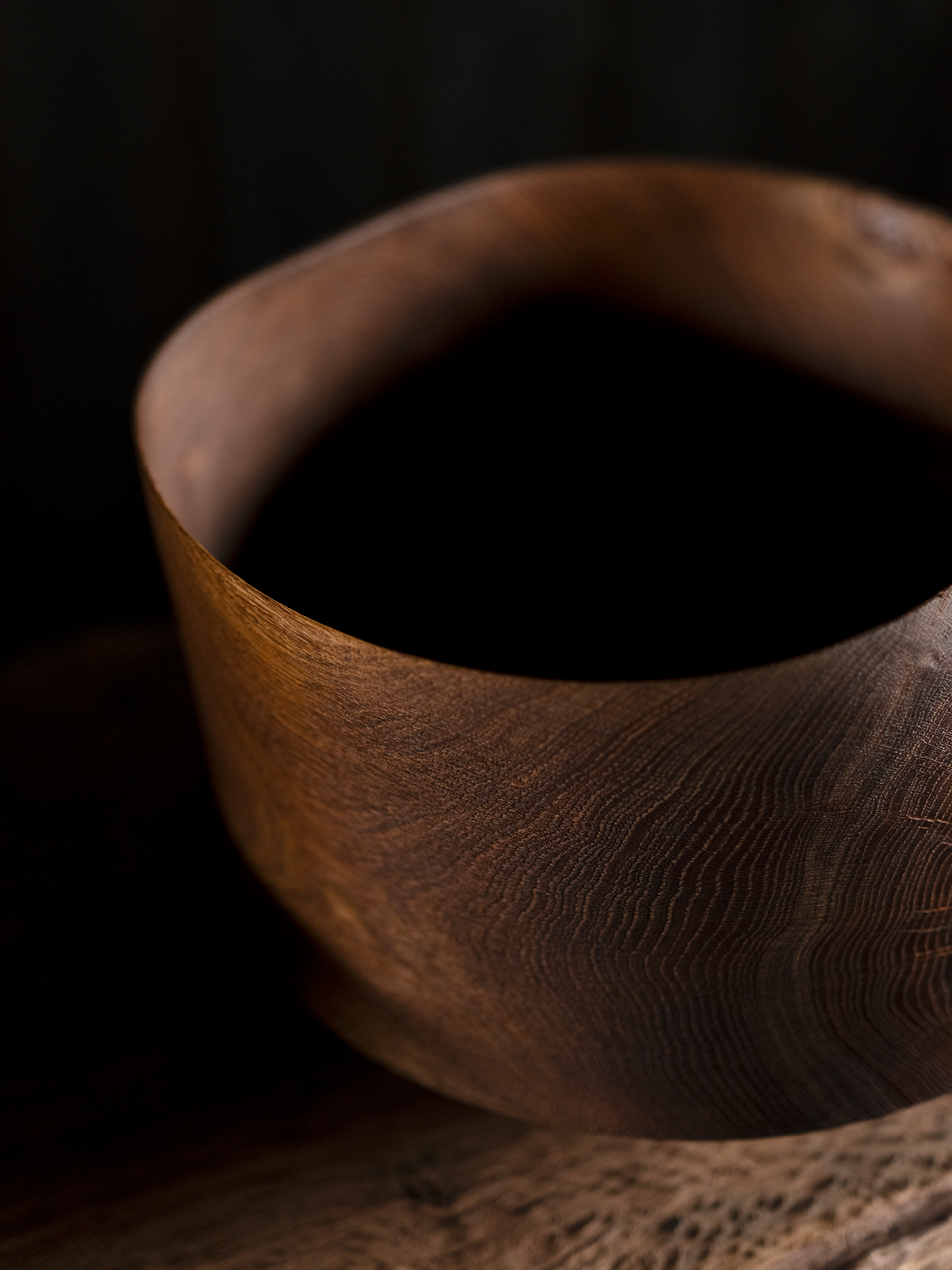
He favors oak for the way it ages and responds over time, yet what excites him most is unpredictability. Fresh oak, he notes, is heavy, wet, and highly reactive. It moves, cracks, and surprises. “That unpredictability is part of the beauty,” he observes.
The drying process is equally deliberate and patient. Mario begins turning the wood while it is still wet, which helps ensure more even drying. “You have to be patient. Too fast, and it cracks. It’s about control, but also about letting the wood take its own course.”
When approaching a new piece, Mario works intuitively. Sketches, sometimes on paper, sometimes digitally, serve as a mental exercise in the pursuit of form rather than a prescription. Branches, knots, and natural irregularities inspire the design. For both Mario and Veerle, cracks and other imperfections are not mistakes but traces of the wood’s history. These irregularities are integrated into the design, occasionally using butterfly joints in the tradition of Nakashima, allowing imperfections to become defining features of the work.
Finishing, primarily Veerle’s domain, blends traditional and experimental techniques. Ammonia fuming, natural plant dyes, and waxes made from locally sourced beeswax, refined and processed in-house, create distinct tones, textures, and scents. Each piece emerges tactile, alive, and unmistakably personal.
Challenges, whether working with large sections, unusual forms, or unexpected cracks, are embraced rather than avoided. “The work itself is the challenge. That’s what keeps me experimenting, keeps me learning,” Mario says. For Moss Studio, woodturning is never simply craft. It is a conversation with the material, a dialogue between control and intuition, patience and discovery.